Biography
Fritz Köthe (1916–2005) is considered a leading representative of Pop Art and photorealism in Germany. After dropping out of school in 1931, he completed an apprenticeship as a painter and, starting in 1936, studied at the Höhere Graphische Fachschule Berlin (Higher School of Graphic Arts in Berlin) and in Leipzig, where his contacts with Käthe Kollwitz and Otto Nagel. During the Nazi era, he worked as a commercial artist, fled East Berlin in 1949, and devoted himself to socially critical motifs with gloomy figures in Stuttgart and West Berlin.
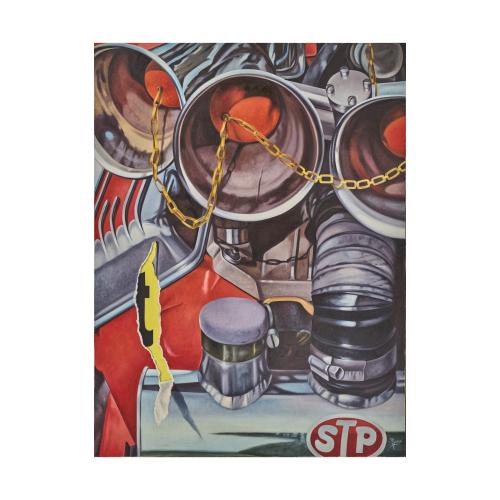
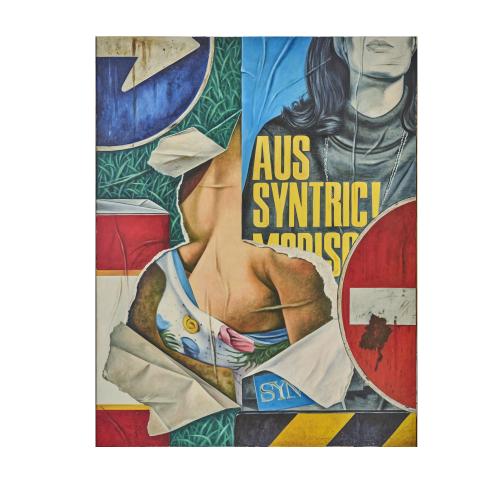
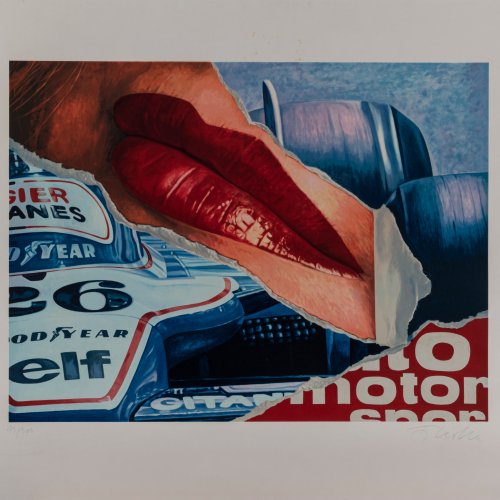
In the 1960s, with the support of Carl Laszlo, he developed hyperrealistic collages from advertising images, eroticism, and technical motifs, which he transformed into surreal compositions—an ironic examination of consumer society. He achieved his first successes in 1964 at the Pels-Leusden Gallery, followed in 1968 by his admission to the New Society for Fine Arts.
Köthe spent the 1970s and 1980s working on increasingly detailed series such as “Vehicles” and “Eroticism and Technology.” In 1979, the Neue Nationalgalerie Berlin showed a retrospective of his work, and international recognition followed through galleries in Cologne and New York. Despite financial difficulties, he remained active in Berlin-Neukölln until old age.
Objects by Fritz Köthe
-
Sold
-
Sold
-
Sold
-
Sold
-
Sold
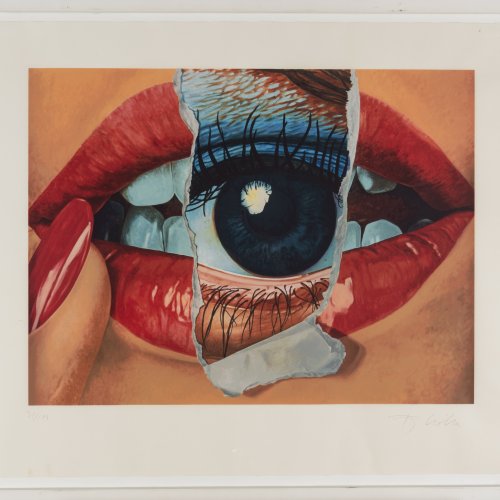
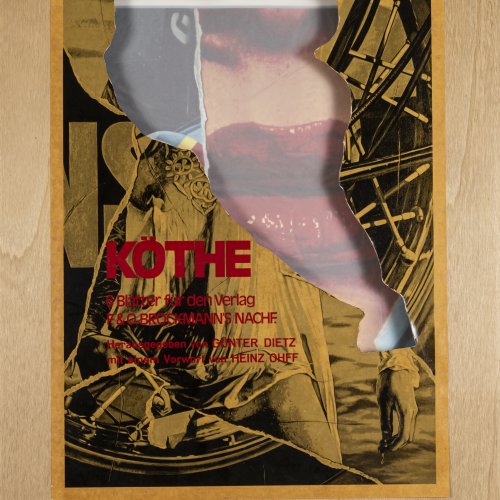
Fritz Köthe Edition Klaus Schober, Dietzungen; Druck DIETZ OFFIZIN, Lengmoos
'Sehen und Sagen', 1978
Hammer Price: 500 €