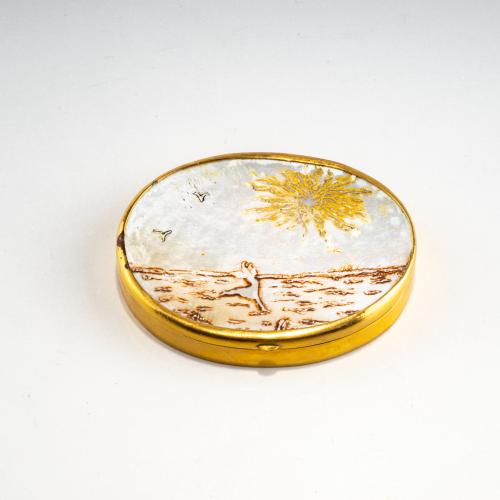
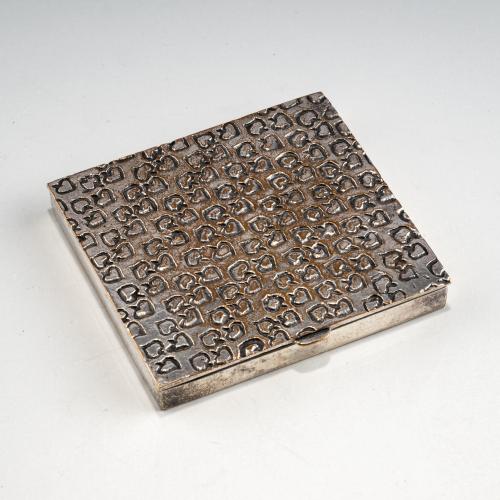
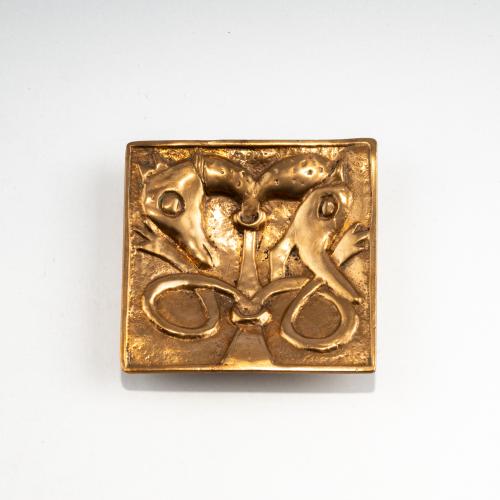
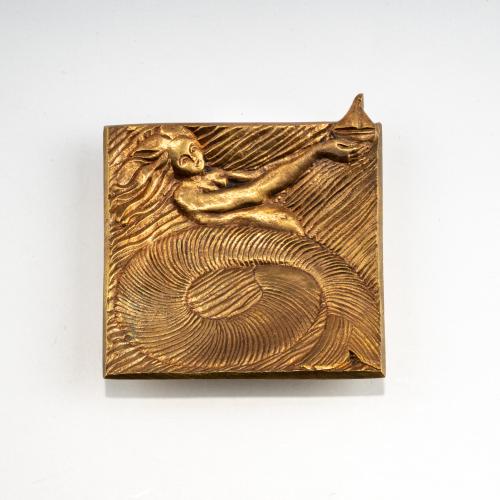
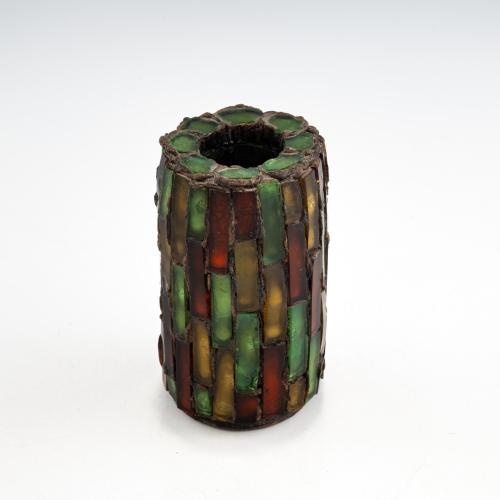
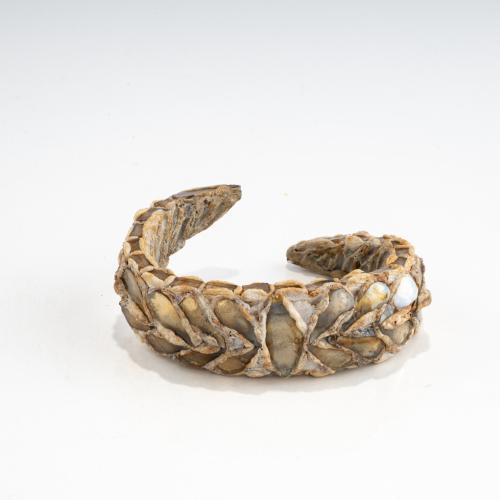
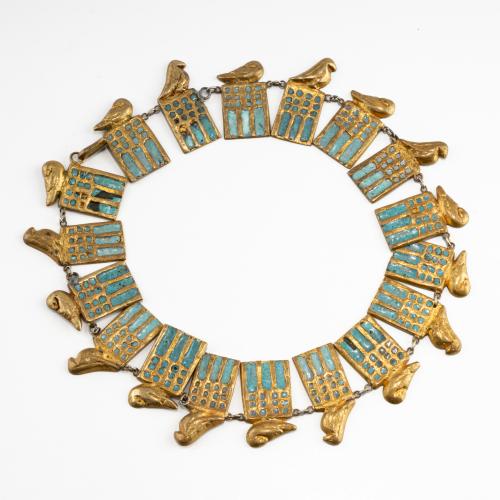
Line Vautrin is one of the most independent designers in 20th-century French decorative art. As a self-taught artist, she developed a distinctive body of work that straddles the line between jewelry and object art. Her works combine artisanal precision with a keen sense of literature, wordplay, mythology, and visual puzzles.
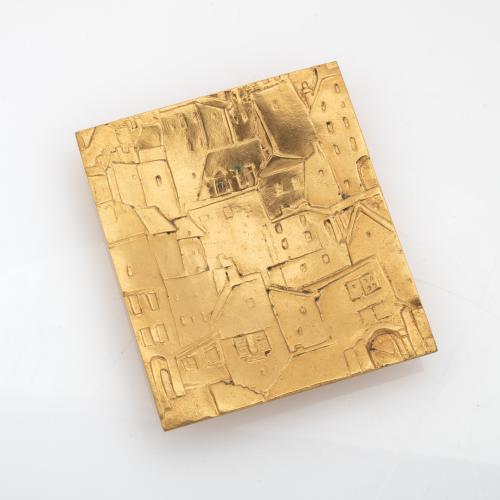
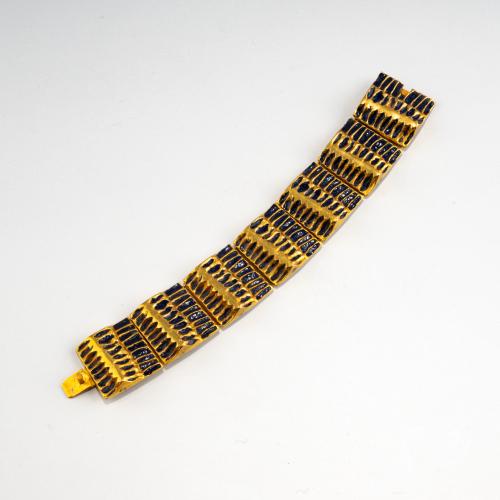
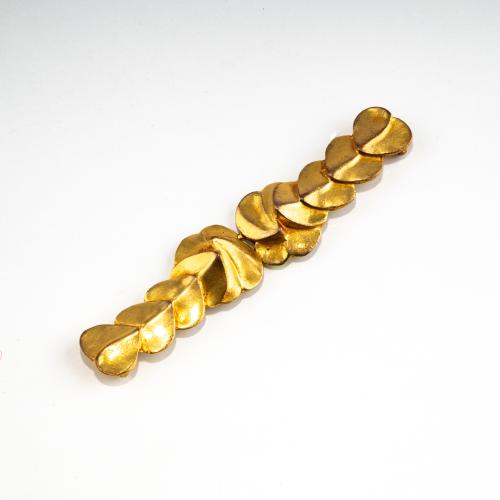
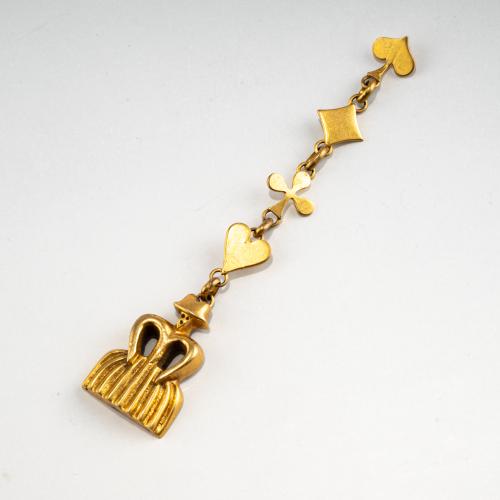
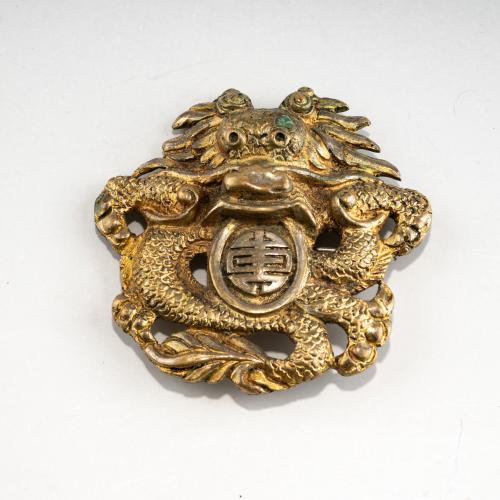
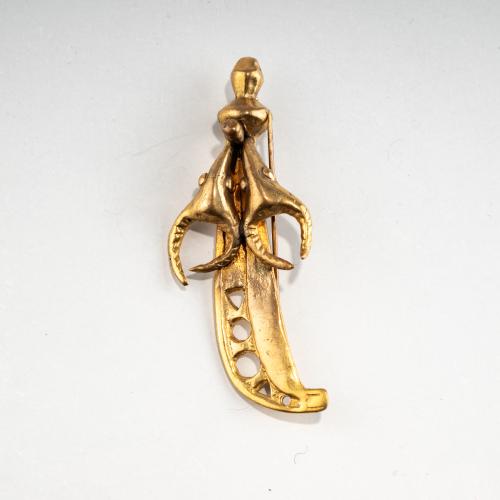
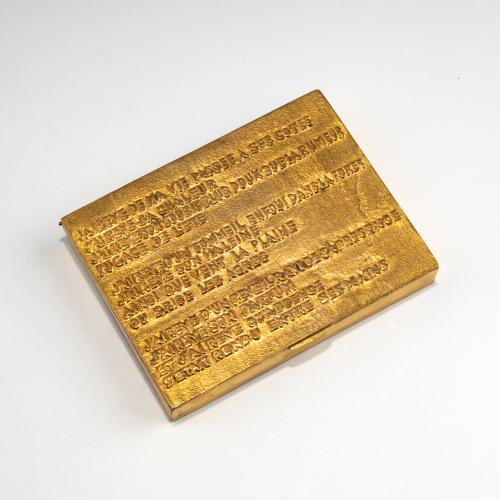
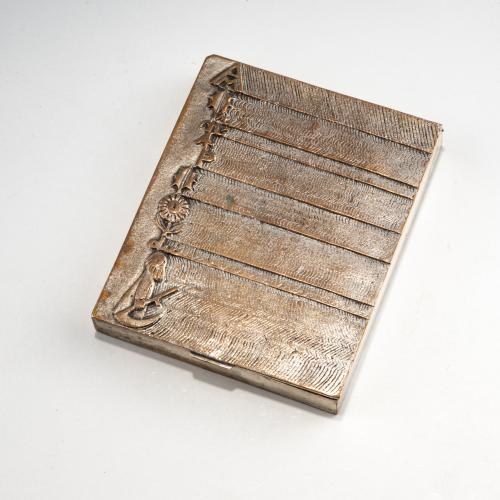
Born in Paris, Vautrin was exposed to metalworking at an early age. Her father was a bronze caster, and in his workshop she mastered techniques such as casting, chasing, gilding, and polishing while still a teenager. In the early 1930s, she began designing her own jewelry. Brooches, belt buckles, buttons, and boxes made of gilded bronze became small canvases on which she depicted figures, lettering, and rebuses. In 1937, she presented her work at the Exposition Internationale in Paris and opened her first boutique shortly thereafter.
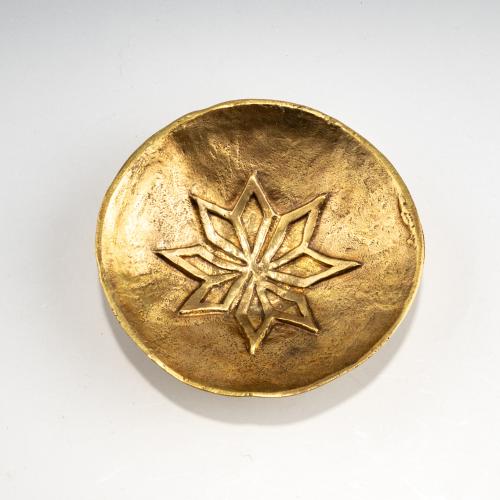
After World War II, Vautrin expanded her range of work. In addition to jewelry, she began creating decorative objects and, increasingly, mirrors. Her exploration of cellulose acetate—from which she developed the material “Talosel”—proved pivotal to her further development. The new technique allowed her to create embossed and three-dimensional surfaces and to incorporate mirror glass into complex compositions. Her mirrors, in particular, became her trademark. The characteristic “Miroirs de sorcière,” with their convex mirror surfaces, resemble small suns or stars with their surrounding rays.
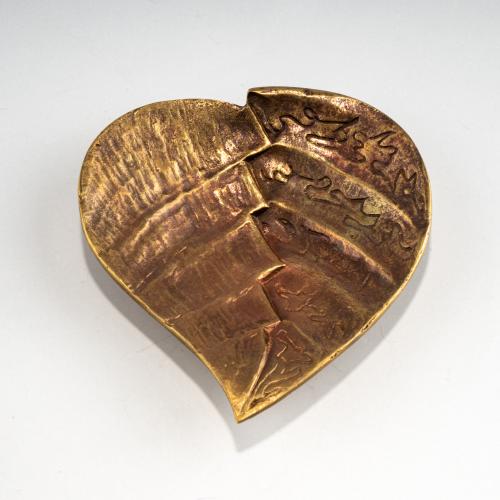
Her passion for language and symbolism was also evident in her decorative objects. Aphorisms, mythological figures, religious motifs, and wordplay appear not as mere decoration, but as elements of a personal visual language. Vautrin’s works invite the viewer to look more closely and decipher their meanings.
Vautrin deliberately worked outside the established educational and design institutions of her time. Her independence as an artist and entrepreneur was unusual for a woman of her generation. In the late 1960s, she closed her boutique and, together with her daughter, devoted herself to passing on her craft techniques. She continued to work in Paris until the final years of her life.
Today, Line Vautrin’s Talosel mirrors, jewelry, and bronze objects are highly sought-after collector’s items. Her works are far more than simply handcrafted objects—they become forms of visual poetry.