Biography
Niki de Saint Phalle is considered one of the most significant and, at the same time, most multifaceted artistic figures of the 20th century. Although her name remains inextricably linked to the colorful “Nanas” to this day, this popular characterization falls short. Rather, her work unfolds across an extraordinary variety of media: painting, relief, graphic art, printmaking, assemblage, sculpture, architecture, jewelry, stage design, and film form a complex body of work that consistently navigates the realms of personal experience, social critique, and visionary design.
Born in 1930 in Neuilly-sur-Seine and raised between France and the United States, Saint Phalle discovered art without formal training and developed an independent visual language that was early on influenced by the European avant-garde, Nouveau Réalisme, and American Pop Art, yet never allowed itself to be clearly subsumed under any single stylistic movement. Her legendary “Tirs” (shooting paintings) from the early 1960s brought her international fame: using a rifle, she fired at reliefs filled with paint, transforming the creative act into a performative gesture that straddled destruction, liberation, and a new beginning. These works not only mark a radical break with traditional notions of painting but are also regarded today as an early feminist stance within action art.
Saint Phalle owes her worldwide popularity to the “Nanas,” whose voluptuous physicality has become a symbol of female self-determination. The figures celebrate the joy of life, fertility, and autonomy, while at the same time questioning traditional gender roles with subtle irony. The “Nanas” are only one part of a much more complex body of work. Themes such as violence, trauma, religion, mythology, the environment, social justice, and political responsibility permeate her entire body of work.
Yet Saint Phalle never saw herself exclusively as a sculptor. Drawings, etchings, and silkscreen prints consistently accompanied her sculptural work; these were complemented by furniture, limited-edition jewelry, and art objects, through which she brought her characteristic visual language into everyday life. Art should not be elitist, but rather experiential, playful, and accessible to as many people as possible. This conviction culminated in the “Tarot Garden” in Tuscany—a total work of art combining architecture, landscape, and monumental sculpture, realized over decades, which is considered one of Europe’s most significant artists’ gardens.
Her artistic networks were just as influential as her work. She shared a long-standing personal and artistic partnership with Jean Tinguely, which ranks among the most productive collaborations in postwar European art. Together with artists of the Nouveau Réalisme movement and curators such as Pontus Hultén, she developed new forms of participatory and interdisciplinary art. These international connections played a decisive role in establishing Saint Phalle’s work worldwide and securing its place in the institutional art world.
Objects by Niki de Saint Phalle
-
Sold
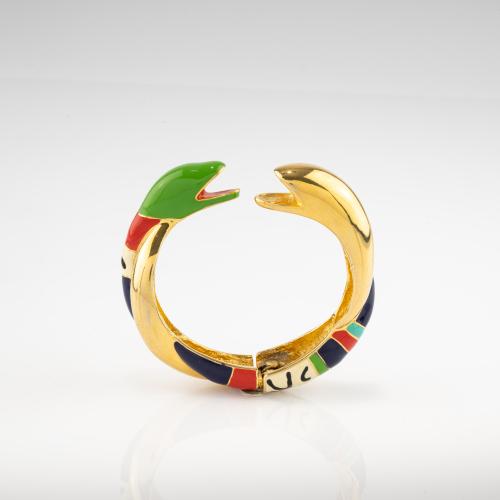
-
Sold
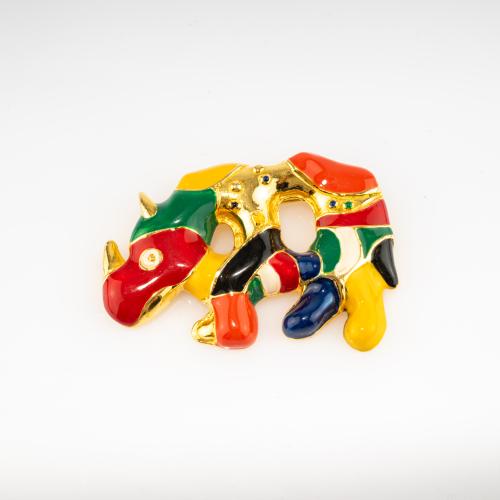
-
Sold
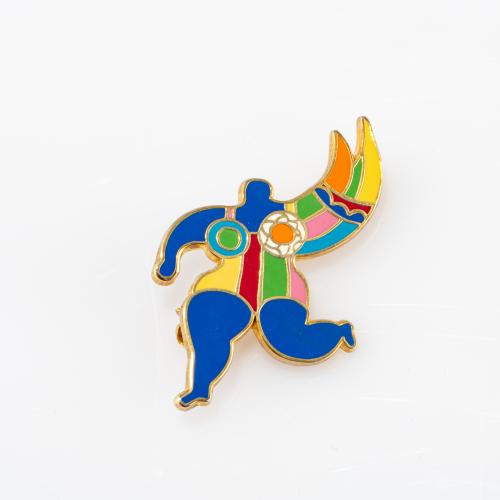
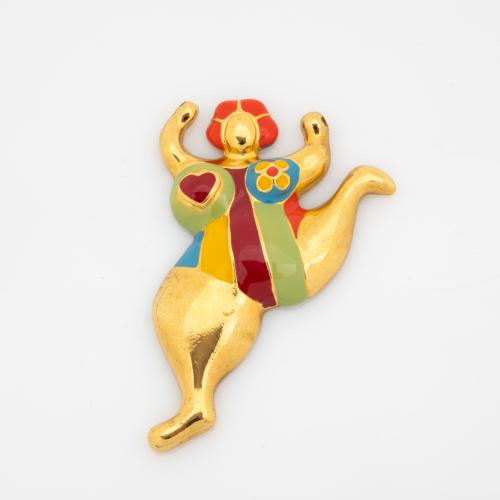
Brooch/pendant 'Ange' (guardian angel), 1990s
Hammer Price: 500 €
-
Sold
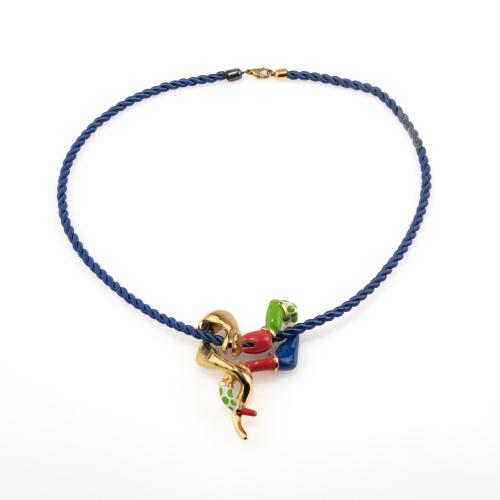
-
Sold
-
Sold
-
Sold
-
Sold
-
Sold
-
Sold
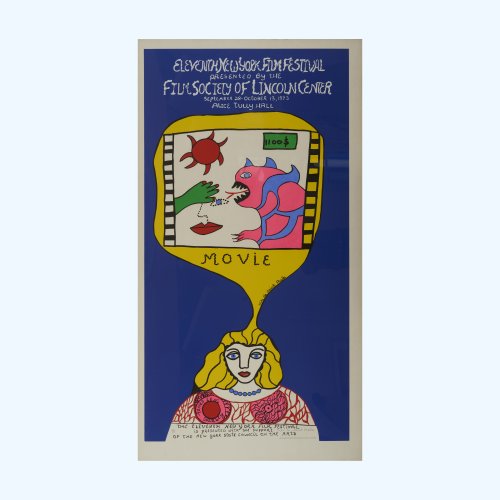
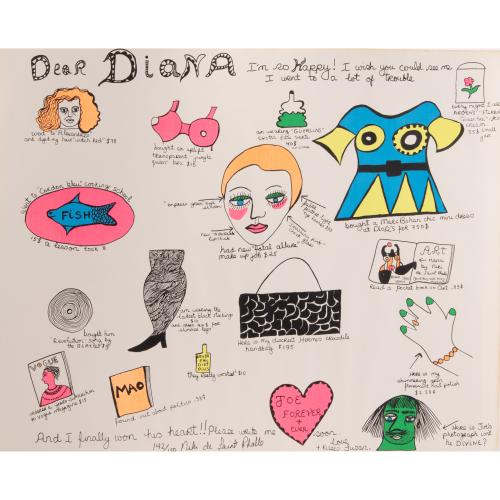
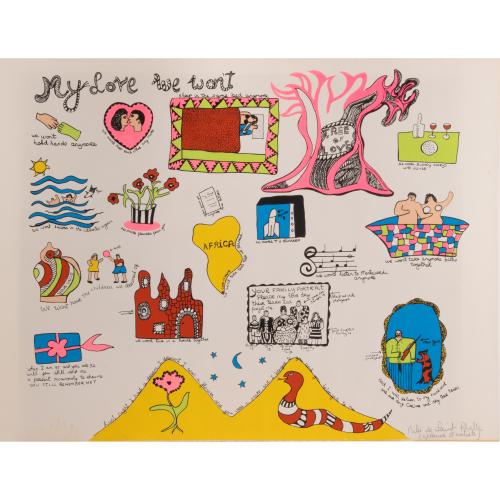
'11th NY Film Festival' and 'Les Fiancés de Knokke', 1973/1993
Hammer Price: 420 €
-
Sold
-
Sold
-
Sold
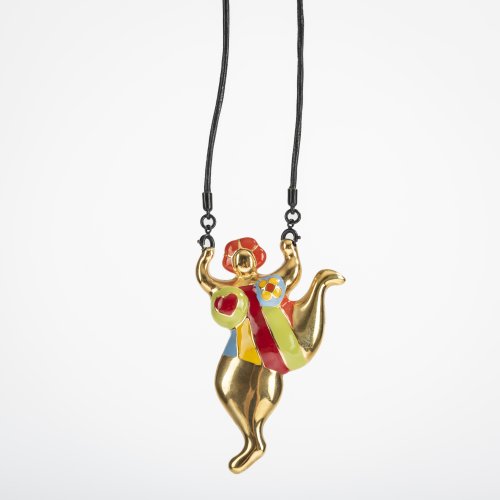
-
Sold
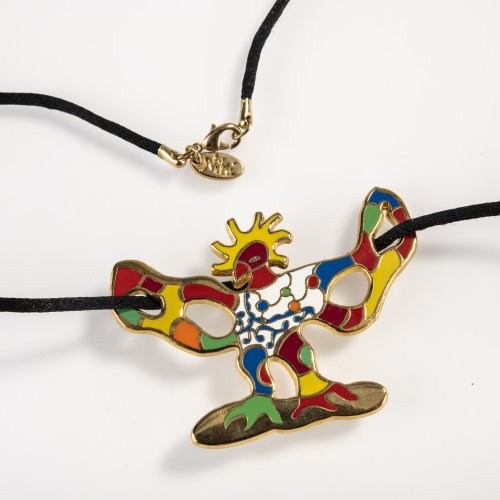
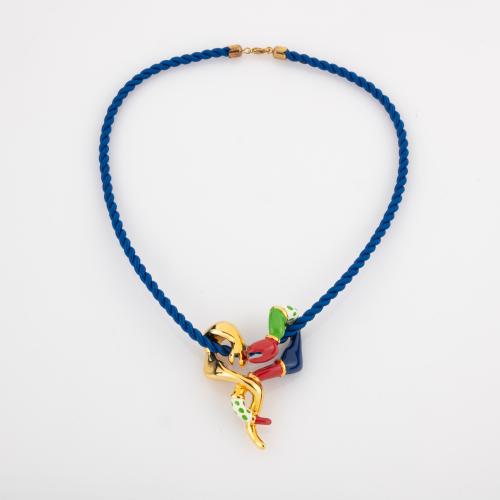
'White Firebird' pendant/brooch , around 2000
Hammer Price: 600 €
-
Sold
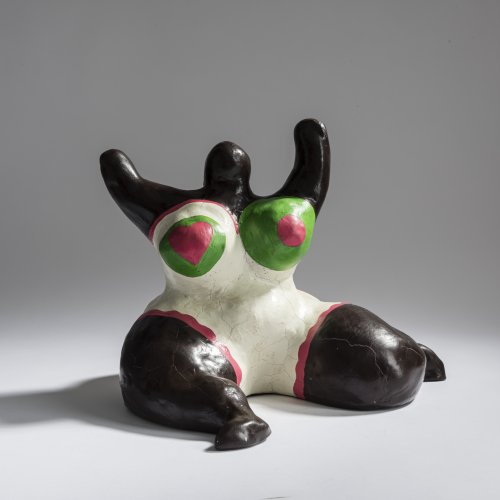
Niki de Saint Phalle Domolith-Kunstwerkstätten, Kevelaer
'Nana de Berlin', 1973
Hammer Price: 5,000 €
-
Sold
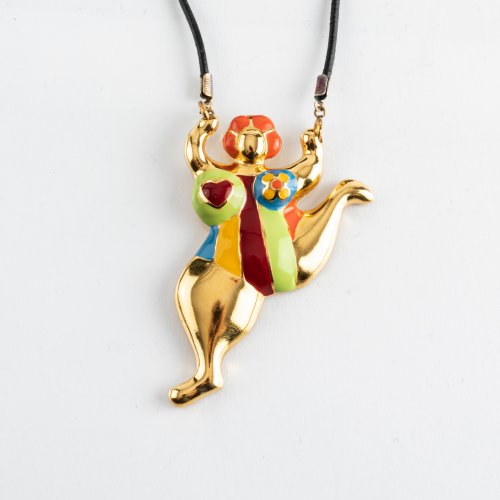
-
Sold
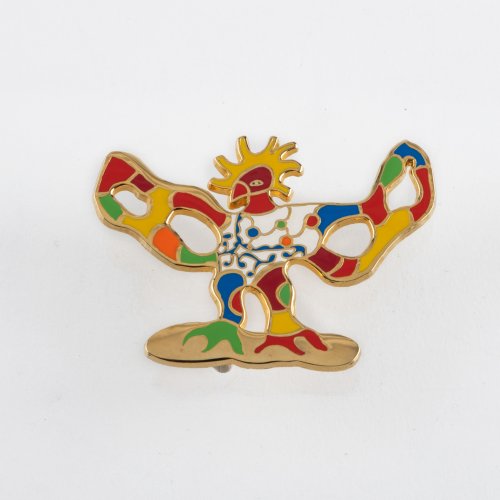
Brooch/pendant 'Oiseau de Feu Blanc', around 2000
Hammer Price: 600 €
-
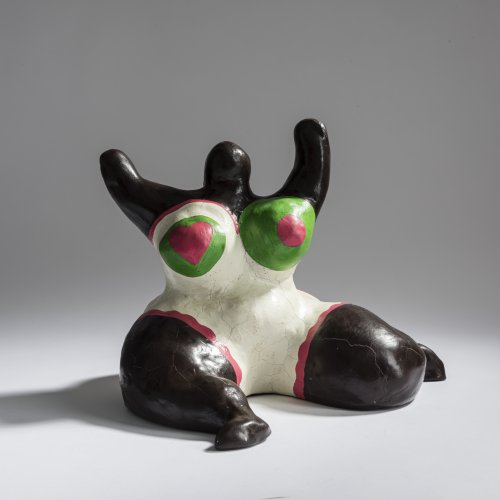
Niki de Saint Phalle Domolith-Kunstwerkstätten, Kevelaer
'Nana de Berlin', 1973
Estimate: 5,000 € - 7,000 €
Unsold lot